

Associated event
Utafiti Elimu Tanzania 2026
2026
Nelson Mandela African Institution of Science and Technology (NM-AIST) Arusha, Tanzania · Jun 22, 2026 12:00 AM – Jun 23, 2026 12:00 AM
View full event →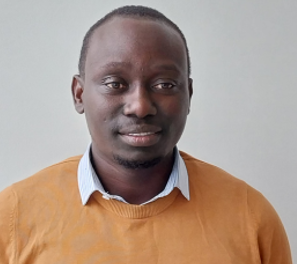
National Edtech Coordinator at the Ministry of Education, Science and Technology · MoEST
Utafiti Elimu Tanzania 2026
2026
Nelson Mandela African Institution of Science and Technology (NM-AIST) Arusha, Tanzania · Jun 22, 2026 12:00 AM – Jun 23, 2026 12:00 AM
View full event →Digital Integration in Education Systems
Jun 22, 2026 12:00 AM
Digital integration is shifting traditional education to tech-enabled curriculums by embedding computing studies and training teachers via specialized Learning Management Systems. However, inadequate rural electricity, expensive hardware, and poor internet access sustain a widening digital divide.
Open full topic / theme page →As the Coordinator of EdTech, he serves as the national focal person for integrating, scaling, and sustaining technology-enabled teaching, learning, and administration across all levels of education (schools, teacher education, TVET, universities, and adult learning). He is also a Senior Lecturer in the Department of Informatics and Information Technology, Sokoine University of Agriculture (SUA). Dr. Barakabitze is recognised as the Tanzania BEST Male ICT Researcher of 2021, awarded by the ICT Commission of Tanzania. He is also recognised as the BEST Young Researcher of the Year 2021 at SUA, awarded by the SUA Research and Innovation Committee.
Beyond his research, Dr Barakabitze has played a pivotal role in shaping Tanzania's digital education landscape. He was instrumental in developing different strategic, policy and guideline documents for the Government of Tanzania including the (a) National Digital Skills Development Framework 2022, (b) National Digital Education Strategy 2024/25 – 2029/2030, (c) National Digital Education Guidelines for Schools and Teacher Colleges, (d) National Digital Education Guidelines for TVETs, (e) National Digital Education Guidelines for Universities, (f) National Strategy for Promoting Diaspora Engagement in STI 2024/25 – 2029/30, (g) Resource Mobilization Strategy for the Implementation of the National Education Digital Strategy and (h) the National Education Assessment Framework 2025.
He was a visiting researcher in the Department of Electrical and Electronics Engineering, University of Cagliari, Italy in September 2016. He was also a visiting researcher in the ITU T-Standardization Department in 2017, Geneva, Switzerland. Dr. Barakabitze have served as a discussant/examiners for PhD concept notes, PhD proposals and PhD theses presented by PhD candidates at SUA and other universities including University College Dublin (UCD), University of Aberdeen, UK, University of Geneva, Switzerland and many others. Dr. Barakabitze have served as session chair of Future Internet and NGN Architectures during the IEEE Communication Conference in Kansas City, USA, 2018. He was also the Keynote and Panel Chairs at the International Young Researcher Summit on Quality of Experience in Emerging Multimedia Services (QEEMS 2017), which was held in Erfurt, Germany. Dr. Barakabitze has led/participated in the national and international research projects funded by external donors and the Government of Tanzania including (a) GPE-TSP, (b) SEQUIP, (c) BOOST, (d) HEET, (e) EEISHEA Project - https://eeishea.org, (f) AI4MORECROPS – www.ai4morecrops.co.tz/wp, (g) YEESI LAB - www.yeesi.org, (h) SmartTB - https://smarttb.co.tz/), (i) UNESCO-KFIT Project III and others.
Dr. Barakabitze is a Reviewer for various journals and serves on technical program committees of leading conferences focusing on my research area of interests. Dr. Barakabitze have more than 70 publications in International peer-reviewed conferences and journals with a total of 2785 citations (as of 3rd June 2026), and H-index of 23. His research interests are digital teaching and learning, Artificial Intelligence, machine learning, digital and data-driven agriculture and food systems, ICT4D, telecommunication systems, future 6G and 2030 networks.