Back to Utafiti Elimu Tanzania 2026
2026

Digital Integration in Education Systems

About this theme

Digital integration is shifting traditional education to tech-enabled curriculums by embedding computing studies and training teachers via specialized Learning Management Systems. However, inadequate rural electricity, expensive hardware, and poor internet access sustain a widening digital divide.

Speakers in this theme

15 speakers

Dr. Lucian Ngeze
Theme speaker

Dr. Lucian Ngeze

lecturer and educational technologist — University of Dodoma

With a strong academic background and a deep commitment to improving learning outcomes, he focuses on connecting traditional teaching practices with modern digital tools. For over 15 years, he has partnered with schools, universities, and international organizations to design practical programs that help educators thrive in changing learning environments. His work is guided by a clear mission: when teachers are properly supported with technology and training, students achieve more.Dr. Ngeze has led numerous projects that bring technology into classrooms across Tanzania and East Africa. He has designed and delivered professional development programs for thousands of primary and secondary school teachers, teacher college tutors, and university lecturers on topics like digital skills, blended learning, and modern teaching methods. His experience includes developing national training guidelines, creating online courses, and advising government ministries and partners such as UNESCO, the World Bank, and UNICEF. Through these initiatives, he has helped educators confidently use technology to enhance both in-person and remote instruction.Dr. Ngeze’s research explores how digital tools and structured training can improve teacher effectiveness and student engagement. He investigates the impact of cascaded teacher training models, integration of technology in teaching and learning, online course design and development, and the integration of artificial intelligence into higher education. His studies also examine open educational resources, instructional design, and data-informed approaches to curriculum development. 

Abdalla M. Mussa
Theme speaker

Abdalla M. Mussa

Executive Director of the Zanzibar Institute of Education (ZIE). — Zanzibar Institute of Education

Abdalla M. Mussa was born in Zanzibar Town. He completed his secondary education at Lumumba Secondary School.  In 2011, Abdalla attended and successfully completed an international program for African countries organized by the African Union (AU) related to postgraduate studies in Curriculum Design and Development. He later completed a Master of Education in Curriculum Design and Development (MECDD) through a collaboration between the United Nations Educational, Scientific and Cultural Organization (UNESCO), the International Bureau of Education (IBE), and the Open University of Tanzania (OUT) in 2019. Currently, Abdalla is pursuing a PhD.  He is married and is the father of five children.  Since 2009, Abdalla has worked as a secondary school teacher, tutor, and part-time lecturer, teaching Geography, Curriculum Studies, Psychology, Sociology, and Guidance and Counselling courses. He has held several leadership positions, including Head of the Education Department and Deputy Academic Principal.  In 2015, Abdalla led the Curriculum and Materials Department at the Zanzibar Institute of Education (ZIE). He was responsible for developing curricula and learning materials for various educational levels, including pre-primary, primary, and college education.  Currently, Abdalla serves as the Executive Director of the Zanzibar Institute of Education (ZIE). He has also worked as a technical team member for the Southern and Eastern Africa Consortium for Monitoring Educational Quality (SACMEQ) V Project and serves as a Project Coordinator for the Virtual Learning Environment (VLE) Project.  Abdalla has contributed to UNESCO initiatives aimed at integrating Human Rights Studies (HRS), Life Skills Education, and HIV/AIDS awareness into education. He has also been actively involved in curriculum review and development at ZIE to ensure that education in Zanzibar meets contemporary social and economic needs.

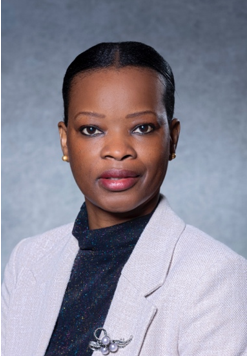
Dr. Ing. Judith Leo
Theme speaker

Dr. Ing. Judith Leo

Dean and Senior Lecturer — School of Computational and Communication Science and Engineering (CoCSE)

Dr. Ing. Judith Leo (Ph.D.) is Dean and Senior Lecturer in the School of Computational and Communication Science and Engineering (CoCSE) at the Nelson Mandela African Institution of Science and Technology (NM-AIST). Dr. Leo is a Tanzanian engineer, data scientist, and a researcher member of the Cybersecurity and Privacy Research Theme, where she leads multidisciplinary research and capacity building in artificial intelligence (AI), data science, embedded systems, mobile technologies, and innovative hardware-based solutions for societal and industrial challenges.Dr. Leo’s research interests include bioinformatics, healthcare data science, satellite imagery, IoT, embedded and mobile systems, climate change, smart agriculture, and environmental modeling. Her academic work is strongly rooted in healthcare applications, with a Master’s research on geo-enabled remote doctor consultation systems for epidemiological analysis in Tanzania, and a Ph.D. focusing on adaptive machine learning models for predicting cholera epidemics based on seasonal weather patterns. She has extensive experience working on multidisciplinary projects that integrate ICT with gender equality, inclusivity, policy formulation, leadership, and open data management across health, education, agriculture, renewable energy, and social sectors.A passionate advocate for girls’ education and youth empowerment, Dr. Leo has dedicated much of her work to inspiring STEM and ICT participation among girls and young people, particularly in marginalized communities. She is the founder of Bintishule, an initiative focused on preventing school dropout and motivating girls to pursue STEM and innovation pathways. She also led the development of impactful tools such as the Early Warning Dropout Visualization Tool (EDV-Tool), currently used in schools in Tanzania to reduce dropout rates among adolescent girls, and the Maternal Money Funding (M2 Funding) system supporting maternal healthcare access. Dr. Leo is a recipient of numerous international scholarships and awards, including DAAD and Queen Elizabeth scholarships. She served as a U.S. Fulbright Scholar in Residence (2024–2025) at Meharry Medical College, USA, where she contributed to teaching and research in Biomedical Data Science while continuing to champion AI-driven solutions for inclusive and sustainable development in Africa.

Victoria John Solomon
Theme speaker

Victoria John Solomon

Biostatistician, data scientist, researcher, and Assistant Lecturer — University of Dar es Salaam

Biostatistician, data scientist, researcher, and Assistant Lecturer at the University of Dar es Salaam with professional experience spanning academia, public health research, monitoring and evaluation, and data-driven development programming. Her work focuses on the intersection of statistics, digital innovation, research systems, and social development, with a growing interest in how technology and inclusive policy frameworks can strengthen education systems in Tanzania and across Africa.She holds a Master of Science in Statistics and has worked with organizations including BRAC International and Population Services International, where she contributed to research implementation, program evaluation, youth and women empowerment initiatives, and evidence-based decision-making. Through these roles, she has gained extensive experience in data collection systems, impact analysis, stakeholder engagement, and the use of digital tools to support sustainable development outcomes.Victoria is skilled in statistical programming and data science tools including Python, STATA, SQL, R, machine learning applications, Power BI, and digital data collection platforms such as ODK and SurveyCTO. Her academic and professional background has positioned her as an emerging voice in conversations surrounding digital transformation, data systems integration, and equitable access to knowledge and opportunities. She has also contributed to scientific research through published and ongoing manuscripts, including Modern contraceptive discontinuation and associated factors among adolescent girls and young women in Tanzania and Age at first childbirth is associated with hormone receptor–negative breast cancer: A cross-sectional study among parous women in Tanzania.In her academic and professional roles, Victoria has facilitated discussions, moderated engagements, coordinated trainings, and led interactive sessions involving students, researchers, development practitioners, and community participants across different thematic areas. Her experience includes facilitating empowerment and mentorship sessions for youth and adolescent girls and young women (AGYW) through programs implemented by BRAC International, particularly among disadvantaged, grassroots, and marginalized communities. Through this work, she has actively engaged with issues related to inclusion, accessibility, communication, youth development, and community participation, while also exploring the growing role of digital systems and innovation in improving learning, empowerment, and access to opportunities.

Adrian Nzamba
Theme speaker

Adrian Nzamba

Dr. Alcardo Alex Barakabitze
Theme speaker

Dr. Alcardo Alex Barakabitze

National Edtech Coordinator at the Ministry of Education, Science and Technology — MoEST

As the Coordinator of EdTech, he serves as the national focal person for integrating, scaling, and sustaining technology-enabled teaching, learning, and administration across all levels of education (schools, teacher education, TVET, universities, and adult learning). He is also a Senior Lecturer in the Department of Informatics and Information Technology, Sokoine University of Agriculture (SUA). Dr. Barakabitze is recognised as the Tanzania BEST Male ICT Researcher of 2021, awarded by the ICT Commission of Tanzania. He is also recognised as the BEST Young Researcher of the Year 2021 at SUA, awarded by the SUA Research and Innovation Committee.  Beyond his research, Dr Barakabitze has played a pivotal role in shaping Tanzania's digital education landscape. He was instrumental in developing different strategic, policy and guideline documents for the Government of Tanzania including the (a) National Digital Skills Development Framework 2022, (b) National Digital Education Strategy 2024/25 – 2029/2030, (c) National Digital Education Guidelines for Schools and Teacher Colleges, (d) National Digital Education Guidelines for TVETs, (e) National Digital Education Guidelines for Universities, (f) National Strategy for Promoting Diaspora Engagement in STI 2024/25 – 2029/30, (g) Resource Mobilization Strategy for the Implementation of the National Education Digital Strategy and (h) the National Education Assessment Framework 2025. He was a visiting researcher in the Department of Electrical and Electronics Engineering, University of Cagliari, Italy in September 2016. He was also a visiting researcher in the ITU T-Standardization Department in 2017, Geneva, Switzerland. Dr. Barakabitze have served as a discussant/examiners for PhD concept notes, PhD proposals and PhD theses presented by PhD candidates at SUA and other universities including University College Dublin (UCD), University of Aberdeen, UK, University of Geneva, Switzerland and many others.  Dr. Barakabitze have served as session chair of Future Internet and NGN Architectures during the IEEE Communication Conference in Kansas City, USA, 2018. He was also the Keynote and Panel Chairs at the International Young Researcher Summit on Quality of Experience in Emerging Multimedia Services (QEEMS 2017), which was held in Erfurt, Germany. Dr. Barakabitze has led/participated in the national and international research projects funded by external donors and the Government of Tanzania including (a) GPE-TSP, (b) SEQUIP, (c) BOOST, (d) HEET, (e) EEISHEA Project - https://eeishea.org,   (f) AI4MORECROPS – www.ai4morecrops.co.tz/wp, (g) YEESI LAB - www.yeesi.org, (h) SmartTB - https://smarttb.co.tz/), (i) UNESCO-KFIT Project III and others.  Dr. Barakabitze is a Reviewer for various journals and serves on technical program committees of leading conferences focusing on my research area of interests. Dr. Barakabitze have more than 70 publications in International peer-reviewed conferences and journals with a total of 2785 citations (as of 3rd June 2026), and H-index of 23.  His research interests are digital teaching and learning, Artificial Intelligence, machine learning, digital and data-driven agriculture and food systems, ICT4D, telecommunication systems, future 6G and 2030 networks.


Dr Aron Kondoro
Theme speaker

Dr Aron Kondoro

Computer Science and Engineering Lecturer — University of Dar-es-Salaam (UDSM)

 Dr Aron Kondoro is a Computer Science and Engineering Lecturer at the University of Dar-es-Salaam (UDSM), Tanzania, with a PhD in ICT from KTH, Sweden. He has extensive research experience and published articles on ICT security, artificial intelligence, blockchain, mobile-based digital solutions, and education technologies. He is a consultant for EdTechHub and has provided services for clients such as the United Nations, Cambridge Education Tanzania Limited, Tanzania Revenue Authority, and the Ministry of Education. Dr Aron has been involved in several EdTech projects and innovations such as the AI-Powered Content Generation Platform for STEM subjects, Teachers Continuous Professional Development (TCPD), Challenge Driven Education (CDE) programme between UDSM and KTH, data mining of learning management schools in secondary schools (Halostudy), evaluation of the School Information System (SIS) in Tanzania, and development of mobile-based learning management systems at UDSM. He has developed several educational and financial-based mobile apps, such as Elimu AI, TCPD Dashboard, UDSM Mobile LMS, Halostudy, and SmartPay, with thousands of downloads in the Google Play Store 

Dr Maryam Jaffar Ismail
Theme speaker

Dr Maryam Jaffar Ismail

a teacher educator, and Senior Lecturer — State University of Zanzibar (SUZA)

with over 35 years of experience in education, language teaching, teacher education, educational leadership, and higher education policy and reform. She previously served as Dean of the School of Education at SUZA from 2014 to 2020 and as the Tanzania Country Lead for the Regional Education Learning Initiatives (RELI) from 2020 to 2022. She is currently serving at the Ministry of Education, Science and Technology, Tanzania as Assistant Director of Higher Education. She holds a PhD (Education) and an M. Ed. (Teaching English to Speakers of Other Languages ) from Monash University, Australia  and a B.A with Education from the University of Dar es Salaam (UDSM) Tanzania. Her academic and professional work focuses on language-in-education policy, multilingualism, the language of teaching and assessment, teacher education, and innovative pedagogies. She is widely recognised for her contributions to Second Language Teacher Education and Teaching English to Young Learners (TEYL) and its discourse ELT/EFL, TEYL,TESL/TEFL, Teaching Kiswahili to Speakers of Other Languages, particularly in advancing student-centred and language-supportive pedagogies within ESL/EFL contexts. Her scholarship bridges policy and practice, with a strong emphasis on technology-enhanced learning, blended education, curriculum reform, and innovative teaching approaches.Dr Ismail has led and contributed to several internationally funded education and research initiatives. These include the NORHED-supported Transformation, Language and Education for Development (TRANSLED) project; the World Bank-supported Zanzibar Improving Students’ Prospects (ZISP) teacher development programmes; the Partnership for Enhanced and Blended Learning (PEBL) supported by the Association of Commonwealth Universities (ACU) and DFID, UK; the STEM for Success Zanzibar (S4Sz) project supported by the Milele Zanzibar Foundation; the Swedish Research Council(SRC) funded project “Understanding Understanding”: Supporting Understanding in the Classroom through Understanding Curriculum Structures implemented in collaboration with institutions in Sweden, the UK, Seychelles, and Tanzania; the Norway–Zanzibar Intercultural Cooperation on Teacher Education (NOZA) initiative; and the ADAPT project on adolescent 21st-century skills in East Africa supported by IDRC Canada, Knowledge and Innovation Exchange (KIX), and the Global Partnership for Education (GPE).Beyond academia and policy work, Dr Ismail serves as Chairperson of the Zanzibar Stone Town Heritage Society (ZSTHS) and collaborates with local and international heritage organisations, including the International National Trusts Organisation (INTO), UK. Through projects involving Stone Town Zanzibar such as Withstanding Change: Heritage Amongst Climate Uncertainty and Salt and Stone: Adapting Heritage for a Changing Climate, she promotes the intersection of education, cultural heritage, climate resilience, and community engagement both locally and internationally. She can be contacted at maryam.ismail@moe.go.tz or maryam.ismail@suza.ac.tz

ENG. HENRY KULAYA
Theme speaker

ENG. HENRY KULAYA

Senior International Education Advisor and transformational education leader — UNICEF- Innocenti’

 Senior International Education Advisor and transformational education leader with over 25 years of experience across the UK and Tanzania, specializing in education reform, leadership development, curriculum transformation, teacher professional development, inclusive education, digital education, and systems strengthening. Former Principal of one of the largest academies in England with extensive education leadership experience including safeguarding, learner wellbeing, staff development, and inclusive practice. Henry is an Implementation Researcher (UNICEF- Innocenti’) and supports the World Bank funded Education initiatives in Tanzania as an Institutional Support Expert, highly experienced facilitator, panel moderator, keynote speaker, and ICF executive coach with strong expertise in drafting Education frameworks and strategies, leadership development, multigenerational learning, and technologically leveraged 21st-century pedagogy. 

Mbwana Yahya Mwinyi
Theme speaker

Mbwana Yahya Mwinyi

Director of ICT in Education — Ministry of Education and Vocational Training, Zanzibar

He holds an MBA in IT Management from Coventry University-UK and specializes in digital transformation in education, educational technology (EdTech), ICT infrastructure, e-learning systems, digital skills development, and ICT project management. He leads initiatives that enhance teaching, learning, and education service delivery through technology across Zanzibar.

Said A.S. Yunus
Theme speaker

Said A.S. Yunus

Educational Technologist, researcher, and lecturer — State University of Zanzibar

 Educational Technologist, researcher, and lecturer at the State University of Zanzibar with over a decade of experience in digital education, instructional design, and teacher professional development. He is currently pursuing a PhD in ICT in Education at Eastern Mediterranean University, focusing on adaptive and personalized learning for foundational literacy and numeracy in Zanzibar primary schools. Said is actively working on projects related to AI in education, online and blended learning, educational innovation, and community empowerment. His research and training initiatives aim to bridge educational gaps through technology integration, capacity building, and learner centered approaches across Africa. 

Dr. Harun Makandi
Theme speaker

Dr. Harun Makandi

Assistant Director of Science and Technology — Ministry of Education, Science, and Technology in Tanzania

He is an education, science, technology, and innovation policy practitioner. His major capabilities are in research, evidence synthesis, curriculum review, and institutional co-ordination. At the ministry, Harun supports policy analysis, programme co-ordination, advisory work, and national undertakings linking education, research, innovation, and skill development.His work covers education policy advisory, curriculum development and evaluation, academia-industry collaboration, work-based learning, technology development and transfer, and research governance. He has contributed to the review of national educational and STI policy instruments, strategic plans, guidelines, implementation programmes, and ministerial briefs aimed at improving learning quality, employability, technological uptake, and research impact.Harun has more than 15 years of experience in research, teaching, mentoring, project co-ordination, and consulting. His academic background spans natural resource assessments, GIS, remote sensing, and environmental research. This gives him a multidisciplinary lens for analysing educational systems, curriculum relevancy, skill demands, innovation pathways, and national development priorities.He has edited and reviewed many academic papers, policy briefs, theses, dissertations and institutional reports. He is known for translating technical evidence into clear policy advice, practical recommendations, and decision-ready briefs for senior government officials, academics, and development partners.

Joseph Wambura Matiko
Theme speaker

Joseph Wambura Matiko

Di rector of Dodoma Technical College (DTC -DIT Dodoma Cam pus) in Dodoma — Dar es Salaam Institute of Technology (DIT)

 Joseph Wambura Matiko obtained a BEng degree in Electronics and Telecommunication Engineering from the Dar es Salaam Institute of Technology (DIT), his MSc in Wireless Communica tions at Lund University, Sweden and his PhD in Electronics and Computer Science at University of Southampton, UK. Joseph has over 20 years working experience in TVET sector as a technician, instructor, a lecturer, a researcher, a consultant and a software developer. He is currently working as an Acting Di rector of Dodoma Technical College (DTC -DIT Dodoma Cam pus) in Dodoma, Tanzania. He is also the Project Coordinator of a Regional Flagship ICT Centre - Specialising in Digital Skills development, which is being established under the support of the World Bank at the Dar es Salaam Institute of Tech nology. His current research interests include blockchain technology, artificial intelligence, mobile computing, embedded electronics for IoT, energy harvesting for low power elec tronic devices, Machine learning/Artificial Intelligence, and Space Technology. Joseph has been involved in a number of local and international research projects and is registered as system developer and has developed a number of institutional, national and regional software systems and contributed to a number of open source system, including blockchain systems. Joseph has published a number of manuscripts in international journals. He is the Co-Au thor of the following Books: (i) “Applications of Energy Harvesting Technologies in Buildings” (ii) “Electronics and Communication Engineering for Technical Secondary Schools - Form Three Student’s Book” and (iii) “Computer Programming for Secondary Schools Vocational Stream: Student's Book - Form Two”. 

Dr. Diana Severine Rwegasira
Theme speaker

Dr. Diana Severine Rwegasira

Lecturer in the Department of Computer Science and Engineering — University of Dar es Salaam (UDSM)

She holds a PhD in Electrical Engineering and Computer Science from the Royal Institute of Technology (KTH), Sweden, a Master's degree in Computer Science from the University of Eastern Finland, and a Bachelor's degree in Computer Engineering and Information Technology from the University of Dar es Salaam. Dr. Rwegasira has extensive expertise in Computer Science Education, Artificial Intelligence, Information Systems, Digital Transformation, Innovation and Entrepreneurship, Curriculum Development, and Educational Technologies. Over the years, she has actively participated in national and international research, capacity-building initiatives, and technology-driven development projects aimed at addressing societal and educational challenges. She has made significant contributions to curriculum development and educational reforms in Tanzania through her engagement with the Tanzania Institute of Education (TIE). As a curriculum development team member, she participated in the preparation, review, and enhancement of science, coding, and computer science curricula for primary and secondary education. Her responsibilities included developing competency-based learning content, reviewing subject materials, and contributing to the modernization of digital and computing education in Tanzania.In collaboration with the Ministry of Education, Science and Technology (MoEST), Dr. Rwegasira contributed to the national initiative on Digital Skills for Primary School Teachers in Tanzania. She participated in training and capacity-building programs conducted in Mwanza, Morogoro, and Arusha regions, equipping teachers with digital competencies necessary for effective technology-enhanced teaching and learning.Beyond curriculum development, Dr. Rwegasira has coordinated and participated in several research and innovation projects focusing on artificial intelligence, blockchain technology, smart energy systems, educational technologies, innovation ecosystems, and digital health solutions. She has served as Project Coordinator, Co-Principal Investigator, Mentor, Researcher, and Trainer in multiple nationally and internationally funded projects involving universities, government institutions, and development partners.

Dr Edephonce N. Nfuka
Theme speaker

Dr Edephonce N. Nfuka

academic, policy adviser, and practitioner in Computer Science and ICT — Ministry of Education, Science and Technology (MoEST)

with more than 20 years of national and international experience at the intersection of digital education and IT governance. He holds a PhD in Computer and Systems Sciences (IT Governance) from Stockholm University, an MSc in Software Engineering from Barcelona, and a BSc in Automation Engineering from Havana. At the Open University of Tanzania (OUT), alongside his academic responsibilities, he serves as Coordinator of ICT in the UNESCO Chair on Teacher Education and Curriculum, where he advances SDG 4 through teacher professional development, competency-based curriculum (CBC/CBET), Technological Pedagogical Content Knowledge (TPACK), Universal Design for Learning (UDL), and the integration of digital and AI-enabled tools in teaching and learning. He has also held senior leadership roles at OUT, including seven years as Director of the Institute of Educational and Management Technologies, where he oversaw ICT implementation and policy engagement; four years as Director of Consultancy and Outreach Services; and, earlier, five years as Deputy Managing Director of the University of Dar es Salaam Computing Centre (UCC), overseeing ICT services, policy, and infrastructure at UCC/UDSM and beyond.His work bridges research, policy, and practice. He recently chaired the Ministry of Education, Science and Technology (MoEST) committee that developed Tanzania’s National Guidelines for Digital Education for schools and teacher colleges, and he contributed to both the National Digital Education Strategy (2024/25–2028/29) and the National Guidelines for Digital Education in TVET. He currently leads the MoEST mobile-learning pilot, which applies an offline-first, three-layer pedagogical model (concept introduction, virtual experiment or simulation, and assessment) in urban and rural secondary schools. He is also the Principal Investigator of the multinational Connected Learning for STEM (CL4STEM) secondary school teacher capacity-building programme across Tanzania, Nigeria, and Bhutan, funded by IDRC. In addition, he has served as Chair of the ICS/ICT subject panel for secondary schools under the Tanzania Institute of Education (TIE); he is a co-author of national TIE textbooks in ICS; and he has contributed to World Bank analytical work advising MoEST on technology policies to expand access and improve quality in higher education, with a STEM focus. His expertise spans digital education policy, strategy, and implementation, as well as IT governance, including frameworks such as COBIT and ISO/IEC 38500, with a strong emphasis on translating policy into practice and evidence into better policy.Contact: edephonce.nfuka@out.ac.tz | enfuka@gmail.com | 0754 280 802 | Open University of Tanzania